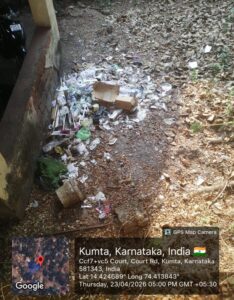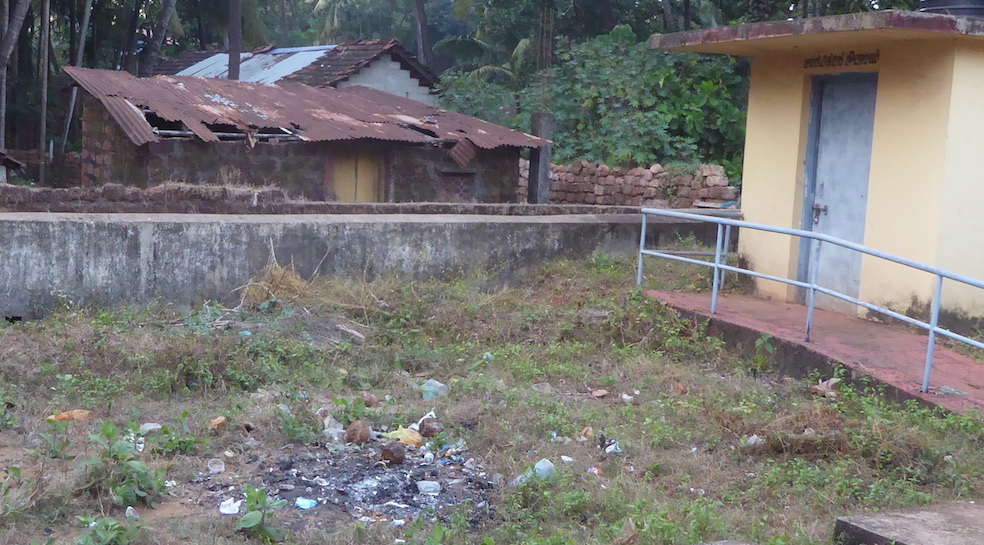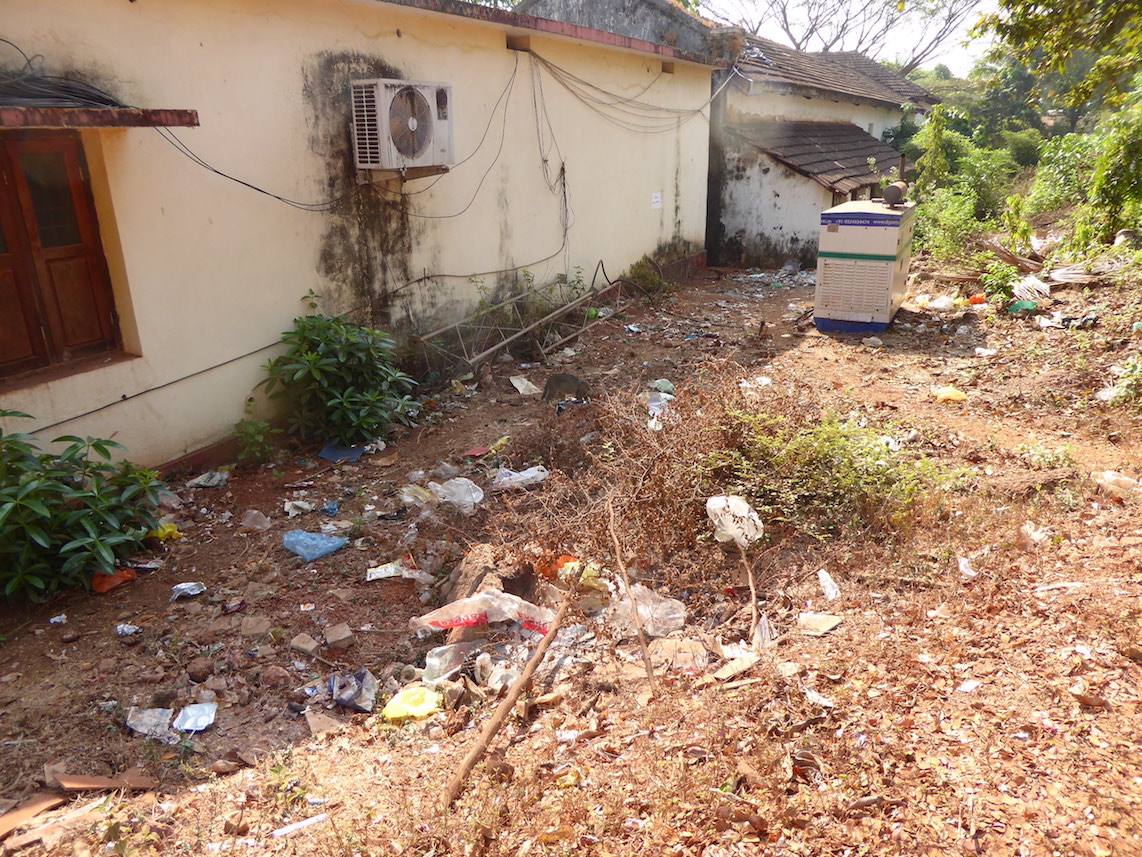
It is quite ironic — and legally vulnerable — for a temple of justice to be a site of environmental non-compliance. While the local court is likely hearing cases or imposing fines on others for pollution, they are creating a toxic black spot on their own doorstep.
We understand that the directions for the retention and disposal of records by Courts balance the preservation of historically and legally significant documents with the practical need to manage physical and digital space. Records are generally divided into two categories to determine their lifespan, and the physical files are liable to be destroyed (usually by shredding or pulping). The Order LVI and Chapter XXI of the Handbook on Practice and Office Procedure (2017) provide the specific framework for these operations. Files must be properly indexed and labeled A-Permanent or B-Temporary before being sent to the Record Room, and the destruction must be carried out under the superintendence of a Registrar or a designated officer. Such waste cannot be incinerated; it has to be managed through procedures that allow the recovery and recycling of the paper. There is assumed revenue generation, and the waste paper resulting from the destruction of records is to be sold, with the profit credited to the Government.
We understand that according to the Supreme Court Rules, 2013 (Order LVI) and the Handbook on Practice and Office Procedure (2017), the destruction of court records follows a protocol focused on security and resource recovery. Under Order LVI, once a record is for destruction, it must be rendered unusable to protect the privacy and confidentiality of the litigants, through shredding or pulping. The destruction of the records is not a dump and burn event. It is a formal administrative act requiring the presence of a supervising officer to certify that the destruction has rendered the records of no value.
We cannot understand under which authority the open burning of mixed waste is being permitted on the court premises for such a long time, even despite the previous intervention of the Regional Officer of KSPCB.
Thus, we demanded the Regional Officer of KSPCB to issue an Environmental Compensation fine to the Kumta court’s administration and to instruct the immediate reversal of the current Legal & Regulatory Violations by the Regulatory Compliance with the Rules, strictly defining the SOP for waste disposal from the Court premises, starting with segregation at source, handling it to Kumta TMC or authorized recyclers.
After Khushi Parisara intervention in 2018 (https://www.khushiparisara.in/court-burlesque-swachh-program/) the Kumta pantheon of justice managers ensured, consistently, to become a site of environmental non-compliance.
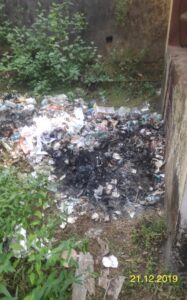
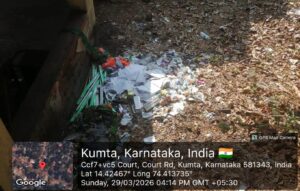
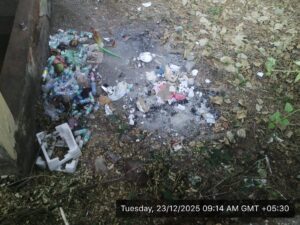
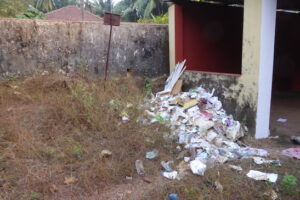
Over these long years, the dirtyness of the premises and the open burning of full mixed waste are well displayed to the goers.
Visual display of Court incinerator:
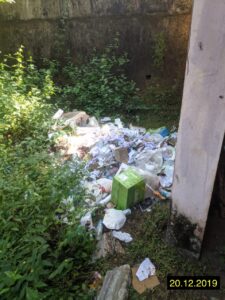 before and after
  .
.
 .
.
 .
.